Sunday, August 2, 2015

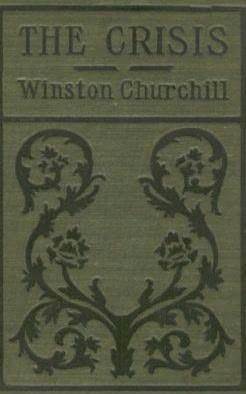
The Crisis by Winston Churchill


5 of 5 stars  *****

Review This is one of the best books I have read this year. I put the book in the bathroom so I would only read a chapter at a time once halfway through - it is one of those books I did not want to end too soon. I love the style, vocabulary, plot, history, characters, and charm of the era when and where the story takes place as well as the author's talent when he writes The Crisis at the turn of the twentieth century.

The language of that time in this fictional history maintains the story's integrity and is not intended to offend, at all. Winston Churchill, 
 himself, a native of St. Louis, incorporates the feelings, beliefs, and mores through the characters' interactions. These characters include both strong-willed, admirable men and women along with the self-important, deprived, and greedy.

The story begins before the Civil War in the considered American West, St. Louis, Missouri, and Illinois. St. Louis is a blend of Southerners and Northerners with the protagonist, a new arrival from Boston, and a flavor of immigrants from Germany. The community's distinguishing elders from both sides are congenial with one another but each have fervent opinions and loyalties when it comes to Union or Confederate. A much reviled and loved character emerges from Illinois; one who sees both sides of the inevitable calamity, who decisively follows his heart in burdensome times evidenced by his love of God and country. This man is Abraham Lincoln.

The story's palpable love interest piques the imagination with the reserved manner of the courting etiquette appropriate for these times. One woman, Virginia, a major character, is the desire of most men who lay eyes upon her but she dictates who is worthy. Her emotional fluctuations poignantly intertwine with the theme of the book, thus, both sides, North and South, unfold in the telling of her suitors' escapades. The best of the human spirit, the noblest qualities of men and women under the duress of war fill the bulk of the plot. The story ends after the Civil War but the story's memory lingers. The Crisis is written in an elegance that captures moments seen through Churchill's vision for every reader's pleasure.
 

Monday, July 27, 2015

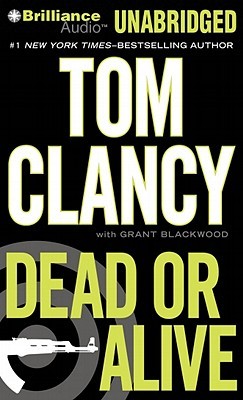
Dead or Alive (Jack Ryan Jr.,#2) by Tom Clancy, Grant Blackwood (Goodreads Author), Lou Diamond Phillips (Narrator)


3 out of 5 stars  ***

Tom Clancy, God rest his soul, writes political and militarily feasible stories that are current for the time of their writing. One always enjoys the thrill ride he creates in Jack Ryan's adventures.Dead Or Alive includes Jack Ryan Jr., a testament to the volume of work the author shares with generations. 

The antagonists change in the span of Clancy's work, as well; this yarn dealing with radical Muslim terrorists. The Russians and Communists behind the Iron Curtain were the first villains in his initial books. Today, Russian adversaries could bring a Tom Clancy novel full circle as events unfold under Putin's aggressive advances to bring back the USSR. 

The major difference one encounters with this Clancy novel is the feeling one has for the characters. The protagonist's development over the years loses his naivete and innocence, even though he is always brilliant and fair. His sophistication seems to make him a member of the in-crowd with its own posturing language fit for a boys gym. It comes across as corny when this style of writing describes decision-making processes in the White House or other strategic headquarters. The writing is good but, at times, almost cliche with the military dialogue. The plot entertains but becomes predictable and lacks the riveting sensation one experiences with other Clancy novels. 

For these reasons, Dead Or Alive gets three out of five stars.

Monday, July 13, 2015

The Foundations Of American Government by David Barton


5 of 5 stars  *****

This companion transcript for the video by the same name is a refreshing return to the truth in History; in particular, the First Amendment and the Separation of Church and State.  These issues are in the scope of politics and social reform today.  It is important to return to the beginning, when the First Amendment becomes the introduction to the United States Bill of Rights, to learn the intentions of the founding fathers along with their desires to keep any one religion from ruling America.  This transcript also points out that there are those who wish to distort history to sway populations toward their own political  agendas.

David Barton's scholarly work employs his excellent collection of old and priceless books written by the hands of the remarkable men of their day.  The onus is upon each individual, today, to verify that which is taught in schools.  David Barton's collection of DVD's and books can be found on his website www.wallbuilders.com with this transcript and DVD set being a part of Building On The American Heritage Series.

Wednesday, May 27, 2015

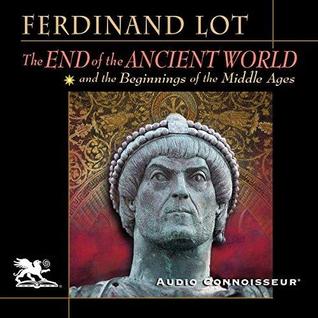
The End of the Ancient World and the Beginning of the Middle Ages by Ferdinand Lot


4 out of 5 stars  ****

Copious and comprehensive describes Ferdinand Lot's The End of the Ancient World and the Beginning of the Middle Ages. The scope of information over hundreds of years reaches back into ancient history to compare the advancements, artistry, and lack thereof through the ages among many civilizations in the known world; basically Asia, Europe, and North Africa. Charlton Griffin, the narrator, uses just the right amount of snobbery in his articulation of events and the arts that demarcate the Ancient from the Middle Ages.

A great historian fascinated with the decline of the Roman Empire and the rise of Medieval times, Lot, for the first time, reveals the reasons Rome fell other than political and military. With perfect diction and pronunciation, Griffin explains that the mere size of the Roman Empire, with its asymmetrical demands, lead to the wealth transferring from the West, the needy, to the East, the providers. To meet the needs of the poor, increased taxation of that population only leads to despair and hopelessness. Suffice it to say, such a civilization is depressed and vulnerable to barbarian invasion.

Lot describes the barbarians and the existing empire through their architecture, literature, paintings, sculpture, geography, politics, social structure, linguistics, belief systems, as well as military prowess. A marked erosion of the pure art form becomes evident when a practical approach to life becomes more universal as wave after wave of marauders disturb the establishments of an anemic society. In some cases, the conquerors allow the existing social structures to remain for better compliance by subjects to their reign. In many other cases, the invaders impose their own customs upon the people and this change is responsible for furthering the distance between progress and stagnation.

This reader finds the subject of this book most interesting because the details of past civilizations are repeating in today's world. The trend of blossoming in a free society is evident more than it is in a suppressed one. Even in a strong, stable society, there are pitfalls that slowly wear away the best accomplishments. The characteristics about which Lot writes are prone to the flaws of man. The arts suffer, the military weakens, the economy is filtered through the greedy, and individuals are taxed into despair. The government must assert more power over the governed in order to make ends meet in the meantime. The powers that be in the realms of religion act in the same manner as the secular powers for preservation's sake. 

A book that eloquently shows the reader outcomes from past mistakes is necessary if a society desires to prevent complacency and rigidity in the extremes that lead to darker ages in the future.

Sunday, May 24, 2015

The Call To Follow Christ by Claude V. King


5 of 5 stars  *****

This devotional I read and studied over seven weeks with a men's ministry, The Herd, at my church. The Herd met to discuss each chapter and its significance every Wednesday evening. The rest of the week was spent devoting a portion of each day reading the chapters and suggested scriptures after praying to establish a connection with God. This practice helped me walk with the Holy Spirt on a daily basis. The outcome gave me a peace of mind that I could not achieve had I not prayed. The trials and tribulations still occurred but I tolerated and faced those moments without the resistance and friction that usually accompanied them.

I pulled another book off of my "unread" bookshelf as I was in the middle of this devotional reading and it turned out to be another devotional series, A Call to Christian Patriotism; only this book's subtitle was, A Weekly Devotional Essay Series. The daily and the weekly devotionals supported each other as I put action to the assignments that I created. My daily prayer focused my weekly Christian patriot application as I engaged in Gospel conversations with people spreading the Word which included America's foundation documents, The Declaration of Independence and the US Constitution.

The Call to Follow Christ came with a CD, music by Damaris Carbaugh, to enhance the book's messages. Music expressed each lesson so beautifully with its lyrics and melody. The experience was one I enjoyed so much that I noticed my interests changed over the seven weeks toward supportive choices that maintained a practice yielding a more joyous life and fuller relationship with God. 

Monday, May 4, 2015

Mockingjay (The Hunger Games #3) by Suzanne Collins, Carolyn McCormick (Narrator)


4 out of 5 stars  ****

This third book of the Hunger Games holds my interest to the end. I watch The Hunger Games on TV the day before I finish this novel and it refreshes my memory about certain qualities the characters possess. Suzanne Collins has a way of making the reader feel for her characters. This book is darker than the other two and it surprises me when a touching moment arises in the end. 

The gist of Mockingjay is struggle after achievement of the impossible only to be faced with despair pre-renewal. The dystopian genre is fraught with young heroes who experience death of family and friends throughout the story. The heroes, themselves, then prepare for their own demise in a realistic, practical frame of mind. It is cold and so different from the Romance novels that are so popular. The thread of a romance appears in this trilogy but one would not call it romantic. The end is a well crafted reflection of the story that evokes an honest range of emotions from those rapt by the tale.

Friday, May 1, 2015

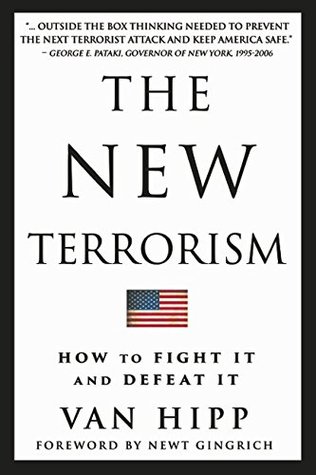
The New Terrorism: How to Fight It and Defeat It by Van Hipp


4 out of 5 stars  ****

An intelligent account of who we are as America compared to the rest of the world. The greatest nation on Earth on a decline related to politics, economics, and military strength is also subject to the heart of its people; the soul of America. This slip in world stature is due to many variables and this author astutely describes America's situation.The New Terrorism is not a negative book, even though the current trends of change suggests that to be the case. On the contrary, the subtitle suggests optimism, How to Fight It and Defeat It

Van Hipp, the author, is fully capable of writing such a book because of his position as Chairman of American Defense International, Inc., and accomplished history over the past 25 years that involve him in American security and international policy at the highest levels. The End Notes at the back of the book reveal the comprehensive research that back up every statement made throughout the book. This lends credence to the veracity of each scenario in all the chapters. A glance at the table of contents tells the reader that he/she is about to embark on a significant education about matters that keep America free and prosperous; but more importantly, Van Hipp truthfully explains just who America is in this day and age of challenges from foreign ideologies and manipulated information. A cogent approach to meet these challenges starts with the common sense approach that utilizes the best of America, its freedom-loving people.

My First Edition, Feb. 25, is published by Countinghouse Press, Inc.. I notice a few errors in the editing and format spacing. These inconsistencies, in no way, detract from the message of this book. The information on its pages is most current and worthy to update everyone to the threats which America faces, now, and in the future.