Thursday, January 7, 2016

The Thing on the Doorstep by H.P. Lovecraft


3 of 5 stars  ***

Evil possession drives people to go mad and kill. This is a story about that realization as a man shoots his friend but swears who he shoots is not his friend but something else. In an attempt to kill the evil, a woman is beaten with a candlestick and buried in a basement. Incarceration of the murderer in an asylum reveals a juxtaposition with that corpse; the evil, once again, loose.

H. P. Lovecraft writes a chilling story that inspires others who write and produce spin-offs of his theme of evil among us. He takes the reader inside the psyche of a killer who rationalizes his actions and experiences insanity as a result. The Thing on the Doorstep is a short, macabre tale worthy of Edgar Allen Poe mention.
 

Wednesday, December 30, 2015

The Chimes (Christmas Books) by Charles Dickens, Richard Armitage (Narrator)


4 of 5 stars  ****

The Chimes, is classic Dickens rich with description and mood. The narrator for this Audio version is Richard Armitage, who is superb delivering its content. More than the story, itself, the richness of Dickens's choice of words creates visions and sensations worthy of captivating audiences, whether they be listeners or readers. Case in point, quote from, The Chimes:

Chapter Three, Third Quarter:

Black are the brooding clouds and troubled the deep waters when the sea of thought, first, heaving from a calm, gives up its dead. Monsters uncouth and wild arise in premature, imperfect resurrection. The several parts and shapes of things are joined and mixed by chance and when and how and by what wonderful degrees, each separate from each and every sense an object from the mind, resumes its usual form and lives again. No man, though every man is, every day, the casket of this type of the great mystery, can tell.


Listening to this short novel requires the listener to pay attention 'lest they miss the beauty of such prose.

Sunday, December 6, 2015

Thomas Jefferson and the Tripoli Pirates: The Forgotten War That Changed American History by Brian Kilmeade, Don Yaeger


5 of 5 stars  *****


This is a great book that describes the details of America's war with the Barbary Coast pirates of North Africa as the fledgling United States of America struggles to become a serious, prosperous country. This listener/reader's knowledge about this war is from high school history but, now, with this Audible Audio version of the book, a deeper understanding and appreciation for the sequence of events in the days of slow communication enlightens this reviewer to the sacrifice and bravery of the men who are willing to give their lives to secure freedom and safe passage of US merchant ships to trade with the rest of the world. 

Patriots who love the country from which their freedom and liberty derive, face an enemy that is the antithesis to the new Christian nation. This enemy is composed of Corsairs, pirates who are part of the Ottoman Empire, a Caliphate, who terrorize any ship that sails the southern coast of the Mediterranean from the 16th to the 18th centuries. Blackmail, butchery, and barbaric slavery intimidate nations into making this treacherous foe wealthy and powerful. European countries like Great Britain, France, the Netherlands, Denmark and Spain are willing to pay ransom for captured seamen or submit to coercion that brings the fickle leaders of Algeria, Morocco, Tunis, and Tripoli large sums of money, jewels, weapons, warships, cattle and anything else they demand. 

The United States becomes a paying member to this group for years under Washington, Adams, and Jefferson's presidencies. The obstacles in the way to confronting this formidable enemy are: a difference of opinion among America's leaders, financial debt that inhibits building a Navy and a force capable of defeating this enemy, and cooperation of Congress. 

It is Thomas Jefferson who listens to the men who have a history with the Barbary Coast and the pirates, themselves, before he decides to confront this nemesis who humiliates the United States in its first attempts to make peace with them. This is the body of the story where the details display the failures due to poor leadership, weather, and supplies, as well as the courage of those who turn the tables on the Corsairs and eventually create the safe shipping lanes for the United States and establish the young North American country as a force with which to reckon.

It is sobering to read this book and realize that the United States of America faces this enemy once again. The enemy is no longer the Corsairs but, rather, jihadists looking to serve a Caliph in a new Caliphate. The fanatical barbarism is the same ideology that perverts freedom, liberty, and everything for which the United States of America stands.

Friday, December 4, 2015

How to Publish Your Book by Jane Friedman (Goodreads Author and Narrator)

How to Publish Your Book by Jane Friedman

4 of 5 stars  ****


How to Publish Your Book is part of The Great Courses offered by Audible books. Jane Friedman narrates this course with eloquence and professionalism. This book dispels the myths that many may have about becoming a successful author just because they are published. She points to the internet ease of pushing a key to publish anything anyone writes. The self-published are not necessarily increasing their chances of success; rather, they can actually hurt their chances of becoming a successful writer.

This book lists the big publishing houses and what their editors are looking for when a properly formatted manuscript is submitted. The submission process is also important if one desires to have a chance at getting their work read. She lists the "Do's and Don't's" of submitting papers and approaching publishers. There is an etiquette in the industry that must be observed to enhance one's chances. Once an editor is reading a story, it must have a good narrative thrust, a cohesive intention from one chapter to another to hold the reader's attention or else the editor stops reading the story.

Ms Friedman also informs readers that the story, itself, is more important than grammar or spelling. When all is said and done, over 99 percent of new authors' submissions are either rejected or ignored. The publisher has a big investment in a published, distributed, and advertised book. They expect a respectable return for their investment. Because of this, they usually stay with known, well qualified, tried and tested authors whose novels appeal to a large population waiting for their next novel to be written.

This book is not intended to discourage writers; rather, it strives to be realistic by explaining the history of publishing and the nuts and bolts of the business. Advice comes in the form of "Do's and Don't's" throughout the process and the purpose why one writes. Jane believes that one should write about what is important to the writer and not write for the audience. She believes the best writing comes from such authors.

How to Publish Your Book is the kind of book this author and reader will refer to from time to time to avoid the wasted time people experience in writing then submitting their work for publication. I would call this a reference book because it is comprehensive in covering all the genres and their particular rules to follow when approaching the appropriate publisher.
 

Friday, October 30, 2015

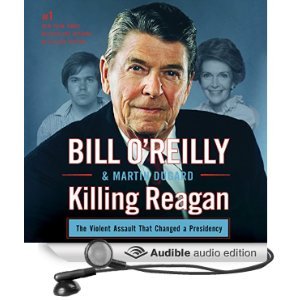
Killing Reagan: The Violent Assault That Changed a Presidency (The Killing of Historical Figures) by Bill O'Reilly, Martin Dugard, Robert Petkoff (Narrator)


5 out of 5 stars  *****

One might think they know a celebrity such as Ronald Reagan. His storied Hollywood career and his most notable political roles as Governor of California and President of the United States reads as the common boy grows up to be a star and occupier of the most powerful office in the world. Killing Reagan: The Violent Assault That Changed a Presidency informs readers of a vinegar laced history with the sugarcoated stories of which one may be familiar. 

What this excellent Bill O'Reilly novel reveals is the greatness, Reagan's ideals, supersede his normal human being status. Reagan's passion for this country and its Christian principles couple with his ability to remember whole scripts to make him the Great Communicator. He accents the right words at the right times. His craft as an actor makes him a convincing politician; but this book credits Nancy Davis, the right woman who supports and protects her husband throughout his political and personal life, for much of his success. 

The family life of this man with his first wife, Jayne Wyman, demonstrates how estranged relationships become after the tragic death of a child. Christine Reagan is born prematurely on June 26, 1947. She dies hours later. Maureen, Ron and Jayne's first child, is born in 1941 and proves to be like her father with her interest in politics. The adoption of a child born March 18, 1945, Michael, is not enough to keep this couple together. Ron and Jayne concentrate on their movie careers and place the children in boarding schools. Jayne and Ron divorce in 1949. At this time Jayne is a registered Republican while Ronald is a Democrat. 

Ron and Nancy's children also prove how a perfect family is far from reality. Patti, born in 1952, rebels against both parents and writes a tell-all book calling her family dysfunctional. She even poses for Playboy offering more juicy gossip on scandals that feed a vicarious population. Ron Prescott Reagan, born May 20, 1958, also speaks out against his father's politics as a liberal talk show host. 

Beyond Reagan's personal life, Bill O'Reilly fleshes out behind the scene events, in monumental times, that live in history, today, as Ronald Reagan's great achievements. His political Conservatism brings America's economy into the balanced budget that escapes his predecessors. The military is stronger and acts as the deterrent which forces the Soviet Union to concede to Reagan's demands; such as, the reduction of nuclear weapons in the world and the tearing down of the Berlin Wall. 

This novel brings up the complexity of politics within politics which is not flattering to Reagan, at all. The Iran-contra scandal describes how accountability is an issue of integrity. What happens in an administration rests on the heads of state. Reagan admits that he does not know when he signs authorization for the clandestine operation. He tells Americans that he is sorry for not knowing about the illegal undertaking. This admission shows how Reagan is willing to suffer the consequences for his actions regardless of his repentance. Because of his owning up to what seems like absentmindedness, at best, Reagan is not a victim of impeachment. Nancy, later, admits that her husband has one fault, and that is, he is too trusting of those around him. Nancy's interventions in politics always stem from protecting her husband from this very kind of scandal.

This book ends with the decline of Ronald Reagan's mental capacity and physical health. Nancy devotes every waking moment to the love of her life. She cannot contain the sorrow when her beloved forgets who she is. In his last days, Patti comes home to live with her "dysfunctional" family. She keeps a journal and records the last days of the American President whose moment in time eloquently speaks the right words at the right times that make the world a safer, better place for a while. Ronald Reagan, a man of principle who matures into one of the best Godly Conservatives, creates a template for a free, prosperous America to shine as a beacon for all the world to see.

Friday, October 23, 2015

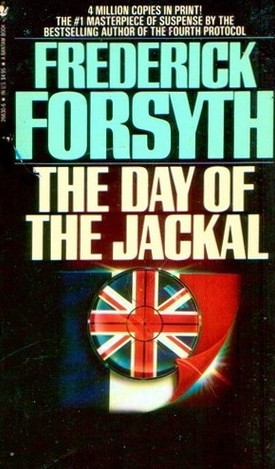
The Day of the Jackal by Frederick Forsyth


4 of 5 stars  ****

Forsyth writes a compelling thriller based on a true story about an organization, the OAS, composed of angry soldiers who feel French patriots died needlessly in Algeria when French president, Charles DeGaulle, pulls the troops out of that country without victory in a frustrating war. The OAS hires the world's deadliest killer, code name, "Jackal", to assassinate DeGaulle, who is the most protected man in the world. 

The story delves into the preparation of guns, credentials, and consorts useful to the Jackal's plans. Forsyth then elaborates on the French security team's efforts to thwart the Jackal once they learn about his existence. DeGaulle's arrogance makes the story more tense when he refuses to change any of his public appearances on his schedule. 

The detail of the plausible schemes with their alterations due to unexpected events are enough to hold the reader's interest. This reader saw the acclaimed 1973 movie before reading this highly recommended 1963 book. The movie seemed so dated and dry lacking the action which today's audience is so accustomed. I gave the movie a three out of five stars. The writing of Frederick Forsyth adds another star for this audience proving that, almost always, the book is better than the movie.

Tuesday, October 20, 2015

Hitler's Last Days: The Death of the Nazi Regime and the World's Most Notorious Dictator by Bill O'Reilly


5 of 5 stars  *****


Bill O'Reilly's compliment to Killing Patton for younger readers, Hitler's Last Days, reads as interesting and enlightening as all of his books. This historical account is full of pictures adding to the vigilance when investigating the facts about Adolf Hitler's life and the significant people who shape this era of war. Hitler's Last Days incorporates the people closest to him and their loyalty, or lack thereof, when Germany falls ending World War II. Hitler's health mimics the Fatherland in its decline and utter destruction during these last days.

After Hitler's suicide with his new bride, Eva Braun, O'Reilly advances the postwar stories of the victors and the losers: Patton's death, Stalin's Communism, Churchill's long life, Eisenhower's presidency, Gen. Omar Bradley's promotion to four-star general , the Nuremberg Trials, and more. Most importantly, O'Reilly paints a picture of the atrocious behavior the Nazis perform on the humans they deem subhuman. The Holocaust is the name given to those atrocities that the select Nazi groups in Hitler's circles commit. Those exempt from those crimes against humanity are the German National Army who adhere to the rules of war and the general population of Germany. This book demonstrates that evil, no matter how brutal and powerful it seems, loses in the end and suffers as much harm as it inflicts.